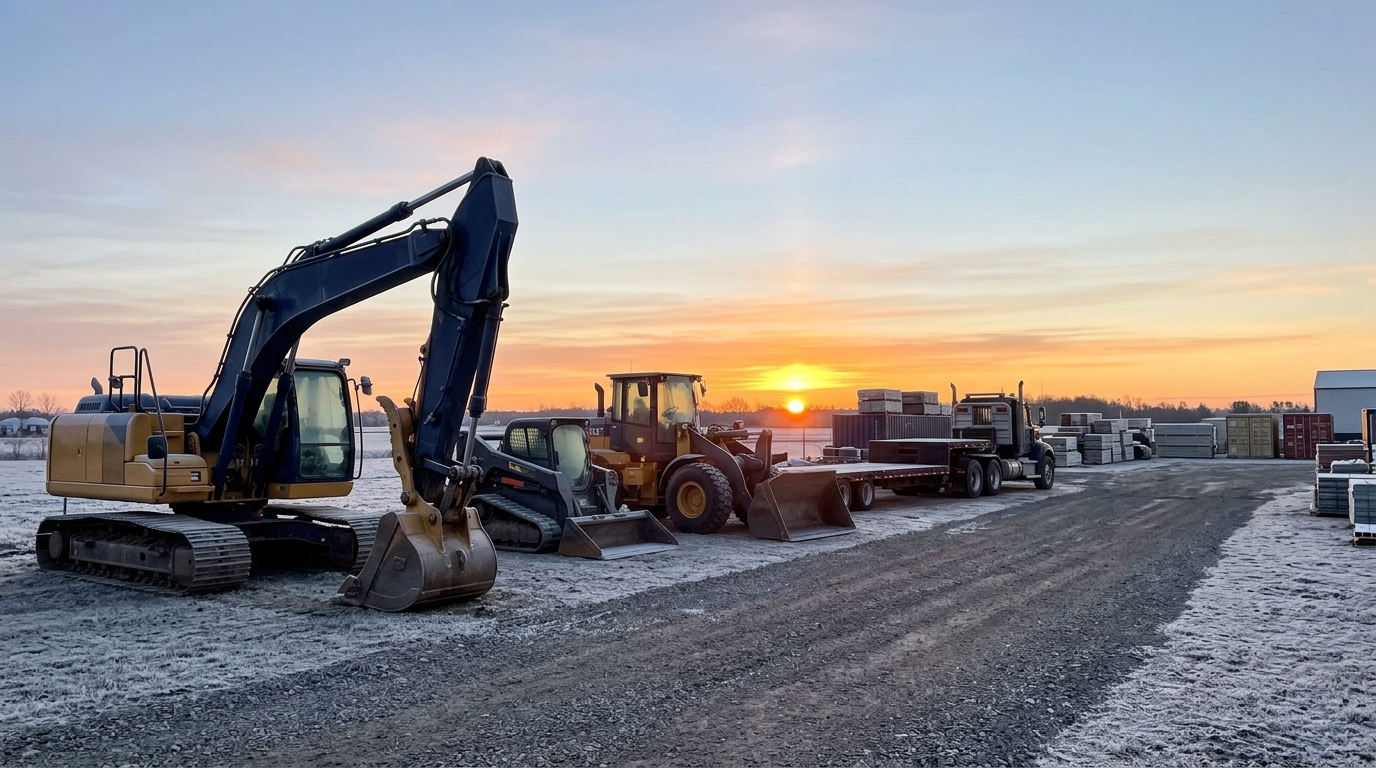
Winter can be a smart time to shop, inspect, and finance new or used construction equipment because it gives contractors time to prepare for spring bids before work ramps up. The Funding Booth can help with dealer and private-party opportunities, including qualifying $0 down and up-to-90-day deferred-payment options. Funding requests range from $5,000 to $100 million, with no blanket equipment-age or hours restrictions.
For contractors, winter is not necessarily downtime. It is often the planning season: a chance to look at upcoming opportunities, identify equipment gaps, evaluate cash flow, and make purchasing decisions without the pressure of an active jobsite. Whether you need one compact machine or an entire fleet addition, planning early can put your business in a stronger position when spring work begins.
Why Can Winter Be a Better Time to Plan Equipment Purchases?
When crews are busy, it can be difficult to step back and assess what is holding production back. Winter may offer more breathing room to review maintenance records, compare equipment options, estimate operating costs, and consider which machines could help you pursue larger or more profitable projects.
That preparation matters before spring bid activity increases. A contractor who knows the equipment cost, expected payment, delivery timing, and operating requirements can bid with more confidence than someone trying to arrange everything after winning a project.
Winter planning does not require assuming every dealer will offer a discount or that every seller will be more flexible. Inventory, pricing, and availability vary by market, machine type, and seller. The advantage is primarily time: time to inspect carefully, compare structures, and line up financing that fits the business rather than rushing a decision.
What Construction Equipment Can You Finance?
Construction businesses rely on a wide range of assets, and financing can be structured around the equipment that supports your work. The right machine depends on the jobs you pursue, the terrain you work in, your hauling needs, and whether the equipment will be used daily or for specialized projects.
Common equipment categories include:
- Excavators for digging, demolition, utilities, grading, and site work
- Dozers for clearing, grading, earthmoving, and site preparation
- Skid steers and compact track loaders for versatile loading, grading, landscaping, and material-handling work
- Backhoes for excavation, loading, trenching, and municipal or utility work
- Wheel loaders for moving aggregate, debris, soil, and other bulk materials
- Cranes and lifts for elevated work, material placement, and jobsite access
- Dump trucks and vocational trucks for hauling, paving, utility, and construction operations
- Concrete equipment, including mixers, pumps, and related production equipment
- Compactors and rollers for roadwork, site preparation, and foundation work
- Trenchers for utility, irrigation, drainage, and cable installation jobs
- Trailers for transporting equipment, materials, and jobsite supplies
- Attachments such as buckets, breakers, augers, grapples, forks, and grading tools
The Funding Booth works with businesses seeking construction equipment financing
for equipment purchases large and small. A request may involve a single attachment, a used excavator, multiple pieces of equipment, or a major fleet acquisition. The goal is to match the structure to the asset, the borrower profile, and the way the equipment will serve the business.
Should You Buy New or Used Construction Equipment?
New and used equipment can both make sense. New equipment may offer current technology, manufacturer warranties, and fewer unknowns regarding prior use. Used equipment can potentially provide a lower acquisition cost and may allow a contractor to access a larger or more capable machine within the same budget.
The more important question is whether the specific equipment is a sound fit for your operation. A well-maintained used machine with complete records may be more useful than a newer unit that is poorly matched to the jobs you perform. Likewise, a new machine can be a strong choice when reliability, warranty coverage, or specialized capabilities are central to your plan.
Before purchasing used equipment, review the hour meter, service history, ownership history, fluid condition, hydraulics, undercarriage or tires, pins and bushings, controls, safety systems, and visible signs of leaks, structural repairs, or excessive wear. If possible, operate the machine under realistic conditions. For larger purchases, an independent inspection may be worthwhile.
It is also important to verify serial numbers, ownership documentation, liens, and title status where applicable. For additional practical guidance, review what to look for when financing heavy equipment
before committing to a purchase.
Can Private-Party Equipment Purchases Be Financed?
Yes. Contractors are not limited to dealer inventory. A private-party purchase may open the door to a specific machine, a locally available unit, or equipment from another contractor who is updating a fleet. This can be particularly helpful when you know exactly what you need and find a unit with a documented maintenance history.
Private-party transactions require extra care. Confirm the seller’s identity, verify ownership, check for liens, review equipment documentation, and inspect the asset thoroughly. The purchase paperwork needs to accurately identify the equipment, price, seller, and any relevant serial or VIN information. Titled trucks and trailers also require proper title-related documentation.
The Funding Booth supports private-party equipment sales
and can help contractors understand the information typically needed to evaluate a transaction. A private sale should still be treated like a business acquisition: inspect the asset, document the deal, and avoid relying solely on photos or verbal assurances.
How Can Deferred Payments Help Protect Winter Cash Flow?
Cash flow is often the deciding factor in an equipment purchase. You may need a machine to pursue work, but you may also need to preserve working capital for payroll, insurance, fuel, materials, repairs, and mobilization. For qualifying borrowers and transactions, $0 down or deferred-payment structures of up to 90 days may be available.
Illustrative example only, not a guarantee:
A sitework contractor purchases a $75,000 compact track loader in January after securing several spring project opportunities. Rather than making an immediate full cash outlay, the contractor qualifies for a deferred-payment structure. That may allow the business to retain cash during the winter for maintenance, insurance renewals, and pre-season payroll needs, with payments beginning closer to the period when the machine is expected to generate revenue. Actual eligibility, timing, payment amounts, rates, fees, and approval terms depend on the transaction, equipment, credit profile, and lender requirements.
Deferred payments are not automatically the best answer for every business. The key is to understand when the first payment is due, how the full obligation is structured, and whether projected job revenue supports the payment schedule. The Funding Booth can help review options so that a contractor is not simply choosing the lowest immediate cash requirement without considering the full financing picture.
Which Equipment Financing Structure Fits Your Business?
Different structures can serve different business goals. The right option depends on the type of equipment, whether it is titled, how long you expect to keep it, your tax and accounting preferences, and your monthly cash-flow needs. You can explore the differences through The Funding Booth’s guide to loans and leasing.
An Equipment Finance Agreement, or EFA, is generally used when the business intends to own the equipment. A $1 Buyout lease is another ownership-oriented option, with a nominal end-of-term buyout. Fair Market Value, or FMV, leases may suit businesses that prefer flexibility at the end of the term, such as returning, renewing, or purchasing the equipment based on its value at that time.
For titled trucks, TRAC or terminal residual structures may be available. These arrangements can be relevant for dump trucks and other vocational vehicles, where titled-asset considerations and residual structures may affect the payment approach. A sale-leaseback can also be worth exploring when a business already owns eligible equipment and wants to unlock capital tied up in those assets while continuing to use them.
Terms generally range from 12 to 84 months, with some longer structures available. Rates can be as low as 6% for well-qualified profiles. Qualified transactions may also receive application-only approvals up to $500,000, and many straightforward decisions can be made within 24–48 business hours. These are general guidelines rather than promises; every request is subject to underwriting and lender criteria.
Can Startups or Contractors With Credit Challenges Still Apply?
Established businesses with strong credit are not the only contractors who need equipment. Startups may need their first excavator or skid steer to begin taking on work. Businesses recovering from a difficult period may need reliable equipment to rebuild capacity. Some applicants may have challenged credit, a prior bankruptcy, or an ITIN rather than a Social Security number.
Those circumstances do not automatically prevent a financing request from being reviewed. The available pathways, required documents, down payment expectations, rates, and terms may differ based on the full file. Equipment type, time in business, revenue, cash flow, collateral strength, and the overall transaction can all matter.
The practical step is to present an accurate picture of the business and the equipment opportunity. That includes identifying the asset, purchase price, seller, projected use, and the business need it will address. Clear information helps the financing process move more efficiently and allows the review to focus on realistic options.
What Should Be on Your Winter Equipment Checklist?
Use winter planning to turn an equipment idea into a purchase decision that supports your spring workload.
- Review upcoming bids, awarded projects, and equipment capacity needs.
- Identify whether purchasing, leasing, or a sale-leaseback best supports cash flow.
- Decide whether new, used, dealer-sourced, or private-party equipment makes the most sense.
- Inspect used equipment, review maintenance records, and verify serial numbers, ownership, and liens.
- Gather a detailed quote, bill of sale, or purchase order with accurate equipment information.
- Estimate insurance, transportation, maintenance, attachments, and operating costs in addition to the purchase price.
- Compare term length, payment timing, end-of-term options, and total financing obligations.
- Consider whether a qualifying deferred-payment option could better align payments with anticipated revenue.
- Prepare business information needed for review, including entity details and available financial documentation.
FAQ
Can I finance older construction equipment with high hours?
The Funding Booth does not apply blanket equipment-age or hours restrictions. Eligibility depends on the specific equipment, transaction, borrower profile, and lender requirements. Older or higher-hour equipment may still be considered, particularly when it is well maintained and appropriately valued.
How much construction equipment financing can I request?
Funding requests range from $5,000 to $100 million. The appropriate request size depends on the equipment being acquired, the business’s needs, and the overall transaction structure.
How quickly can I receive a financing decision?
Many straightforward requests can receive a decision within 24–48 business hours. Timing can vary when additional documentation, inspections, appraisals, title work, or complex transaction details are needed.
Spring-ready contractors plan in winter. The Funding Booth can help you examine equipment options, payment structures, and timing before the busy season begins. Start by checking the numbers through an instant quote request or book a consultation; checking your numbers uses a soft inquiry.